


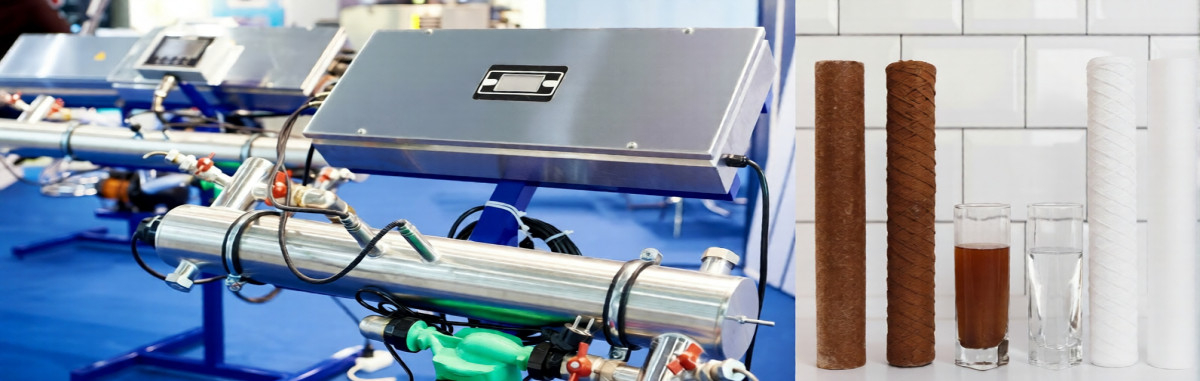
Cartridge Filter And UV
Cartridge Filter And UV
• Ultraviolet (UV) disinfection is a chemical-free method that uses short-wavelength UV light to kill or inactivate microorganisms like bacteria, viruses, and fungi. This is achieved by damaging the microorganism’s genetic material (DNA and RNA), preventing it from reproducing and causing harm. It is a common disinfection method for water and can also be used for air and surfaces.
• Exposure to UV light: Water, air, or a surface is exposed to UV light, typically in the UVC range (200-300 nm).
• DNA damage: The UV radiation penetrates the cells and is absorbed by the DNA and RNA of microorganisms.
• Inactivation: This absorption damages the genetic material, breaking molecular bonds and rendering the organisms unable to reproduce or infect a host.
• No chemical residue: Unlike chemical disinfection, this process does not leave behind any harmful chemical by products.
• Effective against a wide range of pathogens: UV disinfection is effective against many microorganisms, including bacteria, viruses, and protozoa.
• No chemical resistance: Microorganisms cannot develop a resistance to UV radiation, making it a reliable long-term solution.
• Effective dose: The effectiveness of the system depends on the UV intensity, the contact time, and the characteristics of the medium being treated. The dose is often calculated by multiplying intensity by exposure time.
